
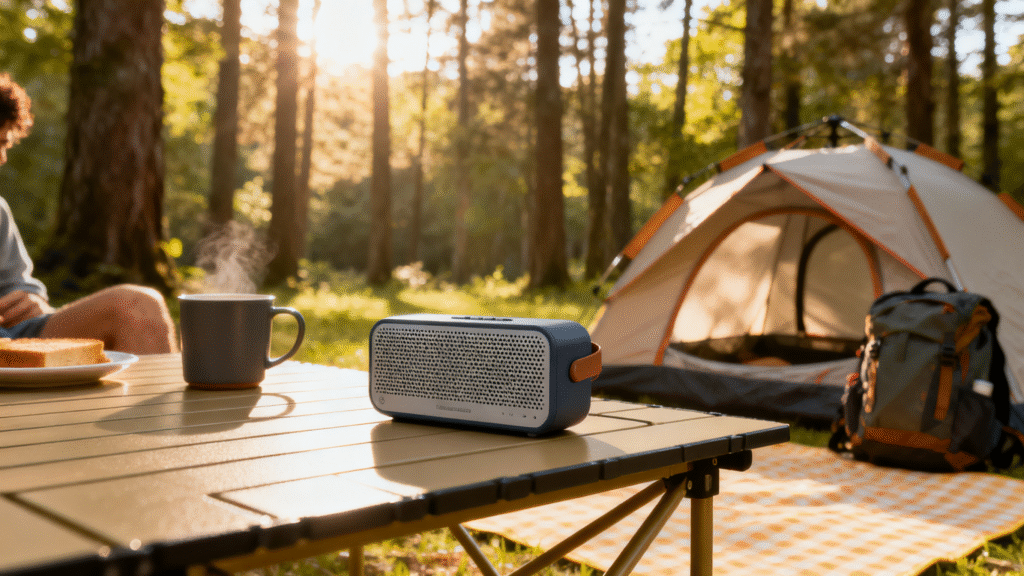
The Evolution of Portable Audio
Remember the days when portable audio meant carrying around bulky boom boxes with limited battery life? The transformation in portable speaker technology over the past two decades has been nothing short of remarkable. Today’s devices deliver sound quality that rivals many home systems while fitting in the palm of your hand.
Key Technological Breakthroughs
Several key technologies have driven this revolution. Class D amplifier technology dramatically improved power efficiency, allowing for smaller devices with longer battery life. Advanced digital signal processing (DSP) enables sophisticated sound shaping and equalization, compensating for the physical limitations of small speaker enclosures. Lithium-ion battery technology provides the energy density needed for extended playtimes, while Bluetooth codecs like aptX and LDAC maintain audio quality over wireless connections. The combination of these technologies has created portable speakers that genuinely surprise first-time listeners with their capabilities.Speaker Driver Innovations
Modern portable speakers utilize advanced driver designs that maximize output while minimizing size. Neodymium magnets provide stronger magnetic fields in smaller packages, allowing for more efficient driver designs. Some manufacturers have even developed proprietary driver configurations that use passive radiators to enhance bass response without requiring larger enclosures.Design Considerations for Portable Audio
Designing a successful portable speaker involves balancing numerous competing factors. Acoustic engineers must work within strict size constraints while maximizing sound quality and volume. This often involves creative solutions like passive radiators to enhance bass response and carefully tuned porting to optimize airflow. Durability is another critical consideration. Portable speakers need to withstand the bumps and drops of everyday use, not to mention exposure to the elements. Many modern devices feature IP67 ratings, making them dust-tight and waterproof – a far cry from the delicate audio equipment of the past.Battery Life Optimization
Battery technology continues to be a limiting factor in portable audio devices. Manufacturers employ various strategies to extend battery life, including:-
- Intelligent power management that adjusts amplifier output based on content
-
- Low-power Bluetooth chipsets with advanced sleep modes
-
- Efficient charging circuits that minimize energy loss
-
- User-configurable power settings for different usage scenarios