
Introduction
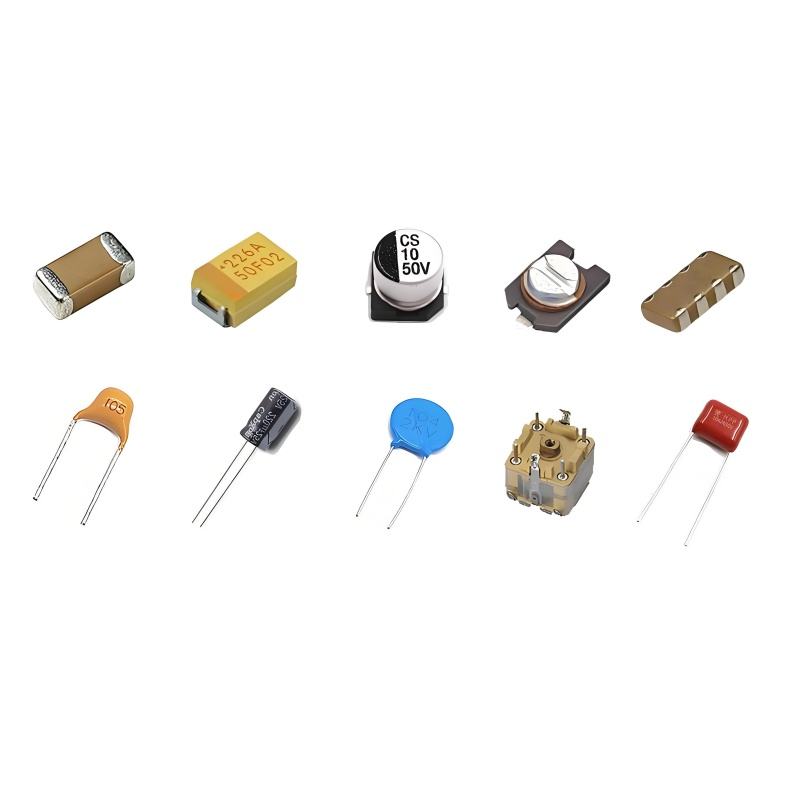
Capacitors are essential electronic components used in almost every electronic circuit. Their primary function is to store and release electrical energy, smooth voltage fluctuations, and filter signals. From power supplies and consumer electronics to industrial control systems, capacitors play a vital role in ensuring stable and reliable circuit operation.
As modern electronic devices become smaller and more complex, selecting the right capacitor type and parameters is critical for performance and longevity.
What Is a Capacitor?
A capacitor is a passive electronic component that stores energy in the form of an electric field. It consists of two conductive plates separated by an insulating material known as a dielectric.
When a voltage is applied across the plates, electrical energy is stored. When the circuit requires energy, the capacitor releases it, helping to stabilize voltage and suppress noise.
Working Principle of Capacitors
The basic working principle of a capacitor includes:
- Charging: Electrical energy is stored in the electric field between the plates
- Discharging: Stored energy is released back into the circuit
- Blocking DC while allowing AC signals to pass (depending on frequency)
In power and signal conditioning circuits, capacitors are often used together with inductors to form LC filters and improve power quality.
Types of Capacitors
1. Ceramic Capacitors
- Small size and high reliability
- Suitable for high-frequency applications
- Commonly used for decoupling and bypass circuits
2. Electrolytic Capacitors
- High capacitance values
- Used in power supply smoothing
- Polarity sensitive
3. Film Capacitors
- Stable performance and low loss
- Suitable for signal coupling and EMI suppression
- Widely used in industrial electronics
4. Tantalum Capacitors
- Compact size with stable capacitance
- Used in space-constrained designs
- Require careful voltage derating
Key Parameters of Capacitors
When selecting a capacitor, engineers should consider:
- Capacitance value (µF / nF / pF)
- Rated voltage
- Dielectric type
- Tolerance
- ESR (Equivalent Series Resistance)
- Operating temperature range
Proper parameter selection ensures circuit stability and long service life.
Applications of Capacitors
Capacitors are widely used in:
- Power supplies and adapters
- DC-DC converters
- Signal coupling and decoupling
- EMI and noise suppression
- Audio and communication circuits
- Inverters and motor drives
In surge protection designs, capacitors may be combined with varistors (MOVs) and gas discharge tubes (GDTs) to enhance system protection.
Capacitors vs Inductors
| Feature | Capacitors | Inductors |
|---|---|---|
| Energy Storage | Electric Field | Magnetic Field |
| Response to DC | Blocks DC | Passes DC |
| Typical Use | Smoothing, coupling | Filtering, energy transfer |
Both components are often used together to create efficient filtering and power regulation circuits.
Conclusion
Capacitors are indispensable components in modern electronic systems, offering energy storage, voltage stabilization, and noise suppression. By selecting the appropriate capacitor type and parameters, engineers can significantly improve circuit reliability and performance.
As part of a comprehensive electronic components solution, capacitors continue to support innovation across industrial, consumer, and power electronics applications.