
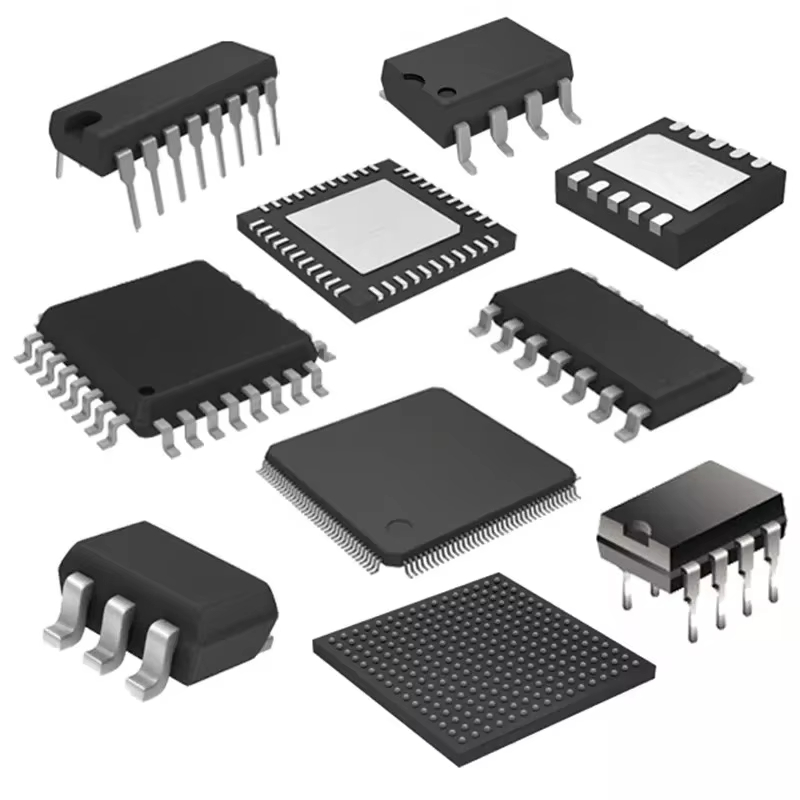
What Are IC Chips?
IC chips, also known as Integrated Circuits, are compact electronic components that integrate multiple electronic functions into a single semiconductor device. They are the backbone of modern electronics, enabling complex operations within minimal space while improving reliability and energy efficiency.
From consumer electronics to industrial automation, IC chips play a critical role in controlling, processing, amplifying, and managing electrical signals.
Main Types of IC Chips
IC chips can be classified based on their function and application:
1. Analog IC Chips
Designed to handle continuous signals such as voltage, current, or audio.
- Operational Amplifiers (Op-Amps)
- Voltage Regulators
- Power Management ICs
Used widely in audio equipment, power supplies, and sensor circuits.
2. Digital IC Chips
Operate using binary logic (0 and 1).
- Microcontrollers (MCUs)
- Logic ICs
- Memory Chips (RAM, ROM)
Common in computing devices, control systems, and embedded electronics.
3. Mixed-Signal IC Chips
Combine analog and digital functions in one chip.
- ADCs / DACs
- Interface ICs
- Communication ICs
Essential in IoT devices, automotive electronics, and smart control systems.
Key Applications of IC Chips
IC chips are used across nearly all electronic industries, including:
- Consumer electronics (speakers, headphones, smart devices)
- Industrial control systems
- Power electronics and inverters
- Automotive electronics
- Renewable energy systems
- Medical devices
Their flexibility and scalability make them indispensable in both low-cost and high-reliability designs.
To prevent damage from voltage spikes, IC chips are often protected using dedicated surge protection devices in electronic circuits.
How to Choose the Right IC Chip
When selecting an IC chip, engineers typically consider:
- Function requirements
- Operating voltage and current
- Temperature range
- Package type
- Compatibility with other electronic components
For example, in power protection circuits, IC chips often work together with varistors, thermistors, and gas discharge tubes (GDTs) to ensure stable and safe operation.
👉 You can explore our full Electronic Components portfolio here:
IC Chips in Modern Electronic Systems
As electronic systems become smaller and more intelligent, IC chips continue to evolve toward:
- Higher integration
- Lower power consumption
- Better thermal performance
- Enhanced reliability
In combination with components such as temperature sensors, inductors, and capacitors, IC chips form the foundation of modern circuit design.
Conclusion
IC chips are the core building blocks of today’s electronic technology. Understanding their types, functions, and selection criteria helps engineers design more efficient, reliable, and scalable systems.
As technology advances, IC chips will remain a key driver of innovation across industries.